Trams in Dogsthorpe
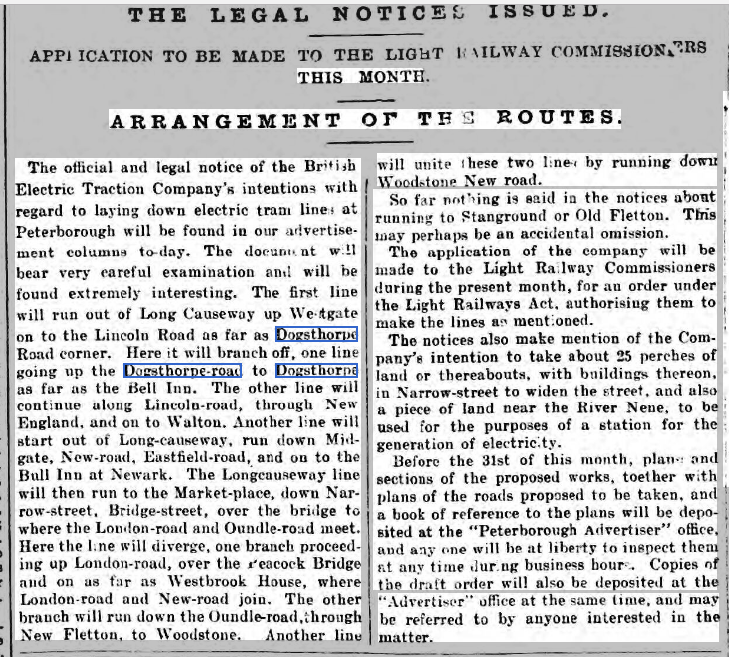
British Electric Traction Company was formed in 1896 to develop tramways throughout Britain. In 1899 they applied to run trams in Peterborough. The construction was authorised in 1900 for six routes.
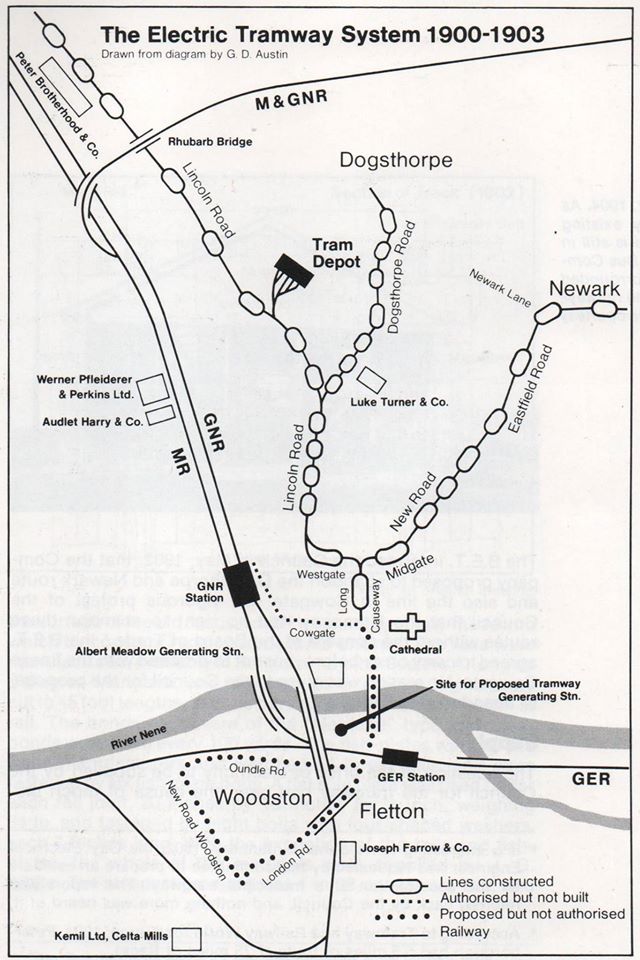
Railway number2, commenced outside the Bluebell Inn, and passing along Dogsthorpe Road , joined another branch at the Lincoln Rd junction. The network also had branches to Walton, and Newark, all of which joined on Long Causeway. The tram depot was in Lincoln Rd Millfield, and is still a bus depot to this day. First day of tram service was 31
st January 1903.
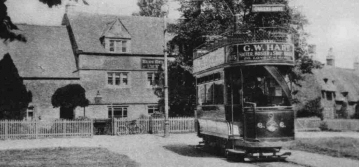
Part of a report from Peterborough Advertiser:
“Having run to the terminus at Walton the cars retrace their wheels and ran on to the Dogsthorpe line. The suburban village, which is being roused, electrified, and generally shaken up, before being enlarged as a consequence of its connection with the world - Peterborough- was reached in ten minutes.
Various speed limits were set by the inspectors, Dogsthorpe Rd was one of the fastest at 12 miles per hour. The trams ran from 8am to 11pm and there was a Sunday service. Three cars ran on the Dogsthorpe route, with a service every 15 minutes. It cost 1d to go from Dogsthorpe to the Lincoln Rd junction. 2d to go to the Market Place (Cathedral Square) in town.
Thirty men were employed on the tramway, the tallest were trained for driving duties and the others as conductors. Their wages were 5d an hour, and they worked 10 hours per day 6 days per week
The Dogsthorpe service was greatly reduced during the first world war (1914 – 1918) and suspended completely for a time, starting again on 24th November 1919.
The tram service ended in 1930, and the business became the Eastern Counties Omnibus Company, and trams were replaced by buses.
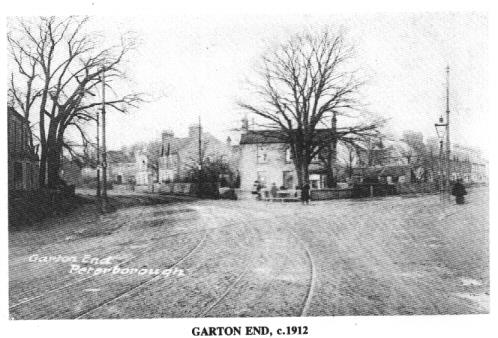
Here is a view of the Dogsthorpe Road, Garton End Road junction with the tram lines heading towards the Dogsthorpe Terminus.
Peterborough Advertiser - Wednesday 24 May 1899
Peterborough Electric Trams